



ABOUT US


“I Hope People Can Become Healthier”: Joanna Liu’s Quiet Determination
26th May, 2026
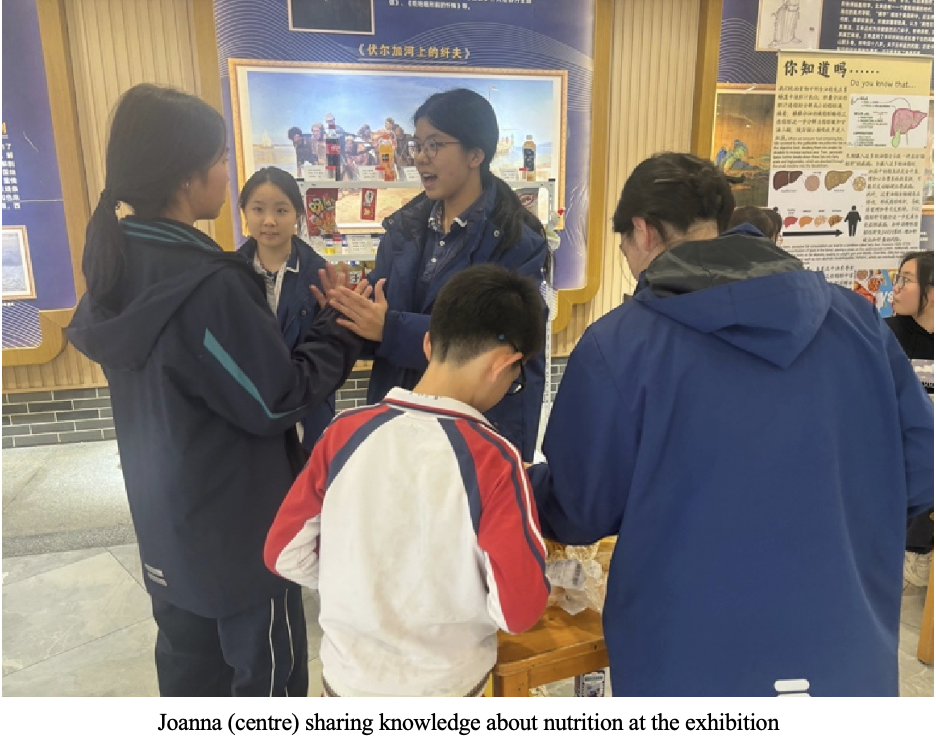
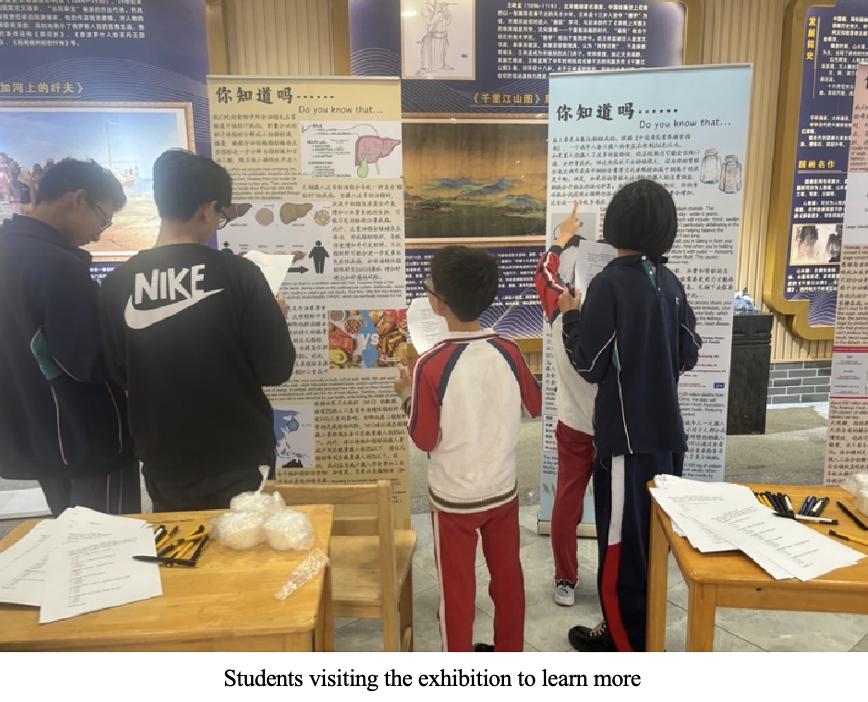
Step into any school convenience shop, and we are surrounded by bright packaging and instant cravings. For a long time, Joanna Liu was just like any other student, grabbing snacks without a second thought. But when she began looking closely at the nutrition labels, the abstract percentages started to worry her. For three months, she quietly transformed a campus exhibition space into a physical experiment, manually measuring out the precise grams of congealed oil and sugar from 19 popular fast foods. Abstract statistics on rising adolescent health issues rarely resonated with students navigating the convenience shop aisles, but confronting the tangible ingredients next to their daily cravings sparked an immediate, collective hesitation.
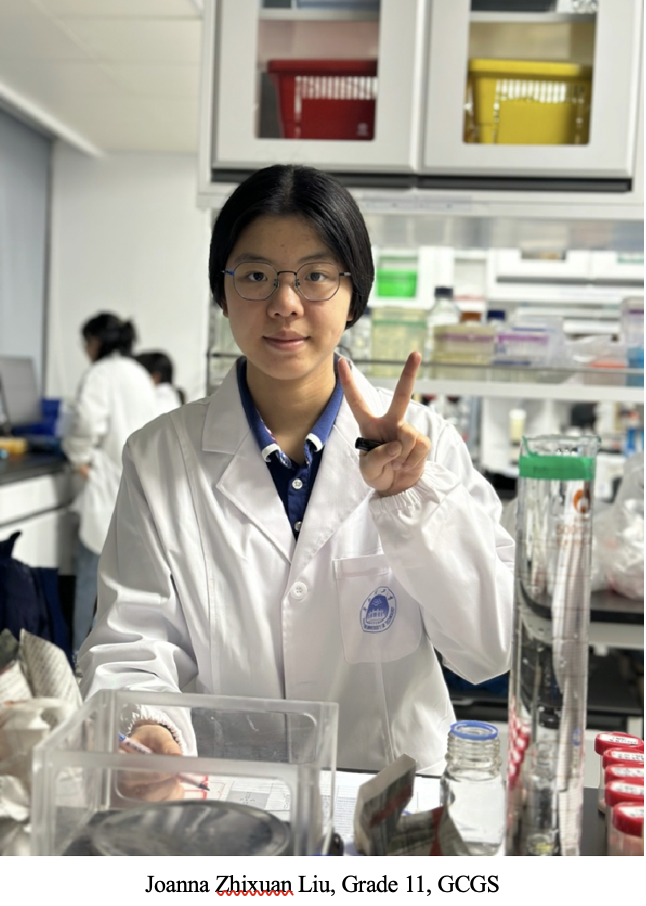
Driven by a genuine concern over rising youth health issues – like metabolic syndrome and fading self-confidence creeping into her own social circles – Joanna designed this visual display to provoke real reflection. “If students can directly visualise the amounts of fat, sugar, and salt hidden inside snacks, they may become more mindful and make healthier choices,” Joanna explained. To ensure this initial visual shock translated into a lasting understanding, she distributed 200 targeted questionnaires to evaluate her peers' knowledge retention. Discovering that roughly 76.5% of participants achieved substantial scores gave her the momentum to turn a temporary display into a permanent campus movement.
Establishing the 18-member Healthy Lifestyle Club allowed her to scale these efforts, leading teammates to distribute 800 dietary recommendation cards and organise interactive workshops on optimal cafeteria meal combinations. Yet, as the movement grew, she realised that merely pointing out hidden additives was only half the battle. True advocacy required offering a tangible, healthy alternative – a realisation that pulled her away from the cafeteria corridors and directly toward the biochemistry lab.
Interactive sessions like the Rainbow Nutrition Workshop at the Xingyue Garden Education Centre brought this scientific alternative directly to younger students. By exploring the vibrant world of natural plant pigments, such as the potent anthocyanins found in blueberries, Joanna led attendees in a hands-on session to craft their own nutritious blueberry polyphenol-soy peptide popping beads. Pushing her ideas into professional research laboratories soon followed, driven by the determination to see her formulations eventually influence large-scale food production and public health beyond the school gates.
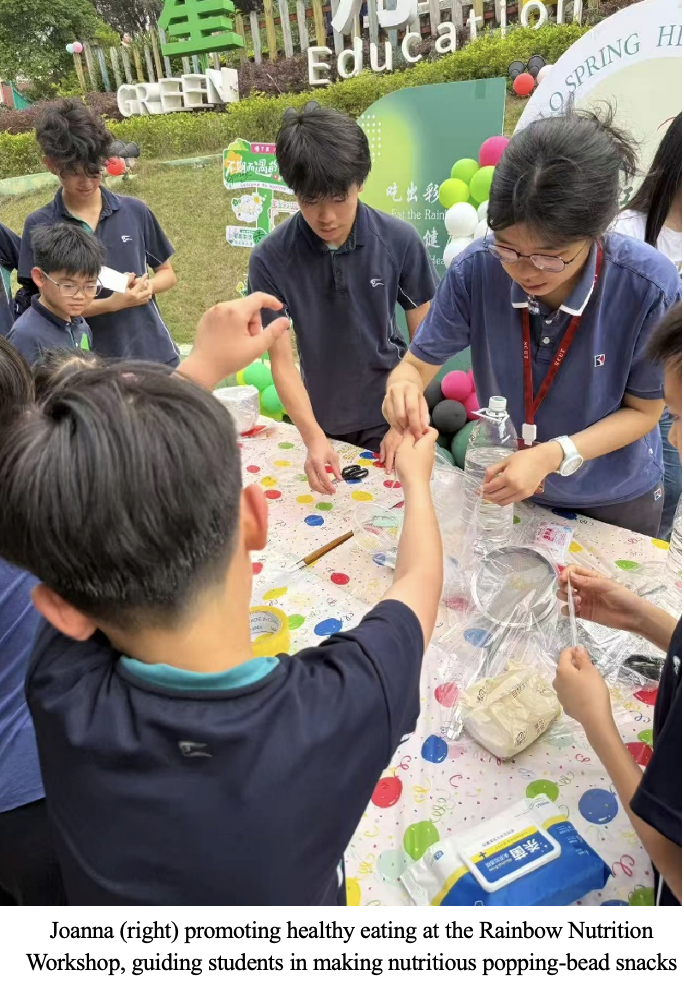
Synthesising nutritious soy peptide–blueberry polyphenol popping beads to replace synthetic, syrup-heavy snack options became her next analytical milestone.
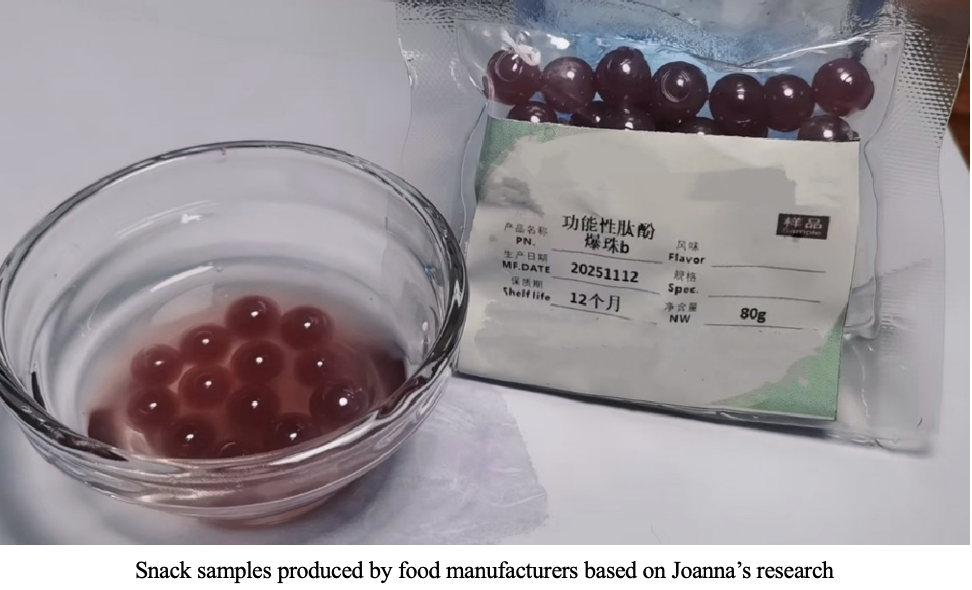
Science, however, rarely yields easy victories, and a critical question from her biology teacher – whether these delicate antioxidant benefits would actually survive human digestion – profoundly shifted her research focus. Investigating this resilience for her Biology Extended Essay (EE), Joanna built an in vitro gastrointestinal digestion model to test the formulation's structural integrity. Hours were spent in the lab tracking distinct colour shifts, stabilising changing pH levels for her Biology Internal Assessment (IA), and measuring how temperature and heating variations affected antioxidant activity for her Chemistry IA. Witnessing the formulation successfully hold its ground under volatile, simulated gastric environments provided the ultimate validation, proving that real-world public health solutions belong at the very bounds of laboratory science.